6 wedding bouquet types 2025: complete guide
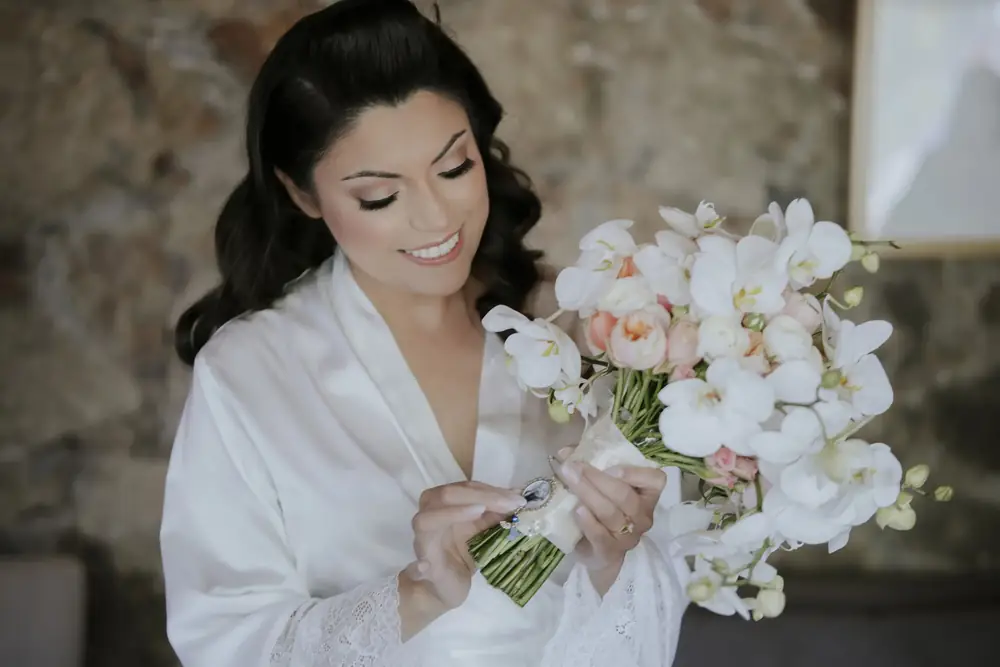
Your bridal bouquet shows up in almost every key photo—processional, portraits, rings and toast. Choosing it well isn’t just “what flowers do I like”; it’s about proportion, concept and logistics. In this 2025 guide we cover the 6 most-used bouquet types—round, posy, nosegay, asymmetric, cascade and hoop—with pros and cons, suggested flowers, dress pairings and practical tips so it looks perfect from first look to last dance.
How to choose—fast
Start with your wedding concept (classic, modern, boho, garden), your dress (cut and fabric) and your height. As a rule of thumb: more dress volume = more contained bouquet; minimalist dress = a statement bouquet. For photos, prioritize blooms that handle the venue’s weather and won’t stain (watch out for pollen on very light fabrics).
Style comparison
| Bouquet type | Vibe | Pairs best with | Photo tip |
|---|---|---|---|
| Round | Classic & romantic | Ballgown or A-line | Hold low (hip level) to define the waist |
| Posy/Dome | Delicate & polished | Church or elegant ballroom | Close-ups featuring lace/ribbon wrap |
| Nosegay | Boho & fresh | Garden or estate venues | Backlight to capture moving foliage |
| Asymmetric | Modern, editorial | Sheath or mermaid dresses | Side profile to accentuate lines |
| Cascade | Sophisticated | Church aisles and long walkways | Aisle entry, 3/4 angle |
| Hoop | Rustic-chic & creative | Garden/rustic weddings | Hands interlaced inside the hoop |
1) Round bouquet
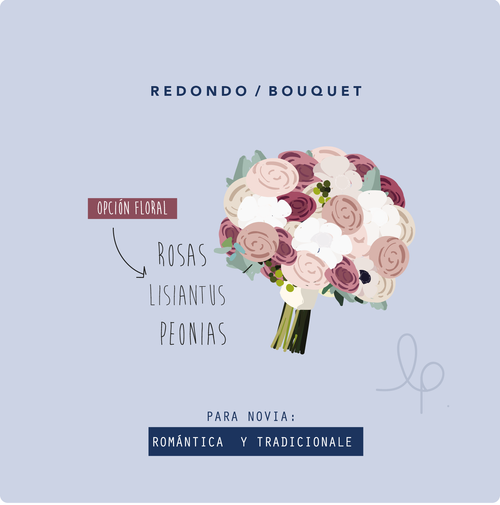
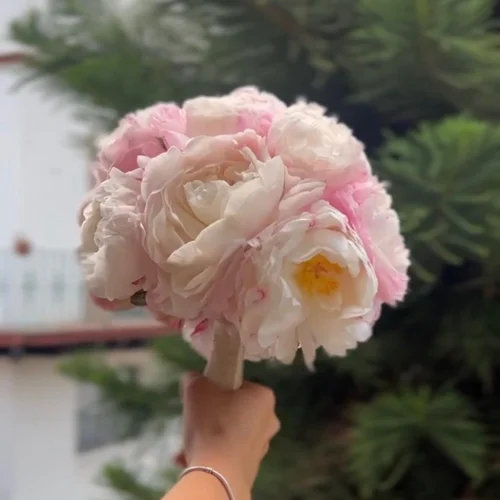
A favorite for classic brides: compact shape, medium diameter and a soft outline. Flatters all heights and looks pristine in ceremony and portrait sessions.
- Pros: timeless, easy to carry, clean visuals.
- Cons: less “editorial” if you’re chasing high impact.
- Suggested flowers: garden roses, peonies, ranunculus, lisianthus.
2) Posy or dome (clutch)
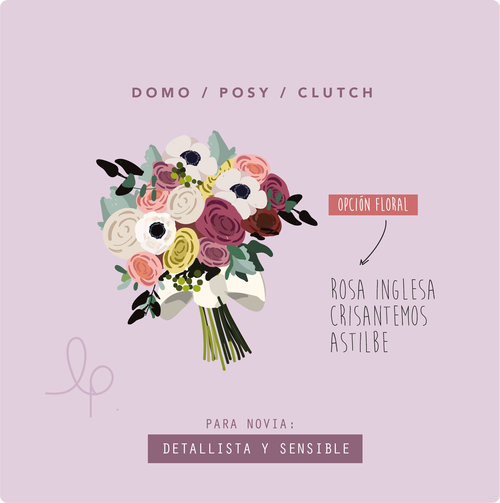
Similar to the round bouquet but with more blooms than greenery and a very polished finish. The ribbon or lace wrap often carries something borrowed (a grandmother’s button, for instance).
- Pros: elegant and photogenic in close-ups.
- Cons: less natural movement; needs optimal hydration.
- Suggested flowers: roses, dahlias, carnation “atlas”, anemones.
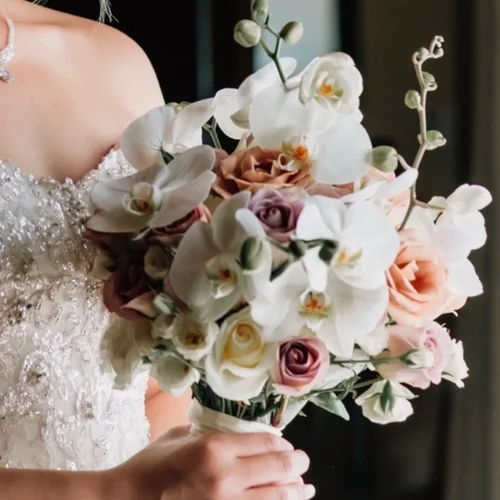
3) Nosegay
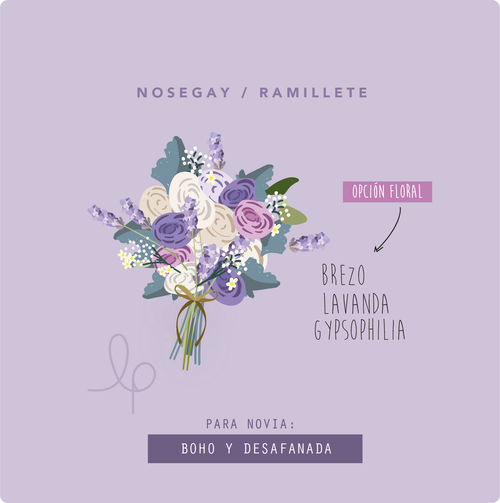
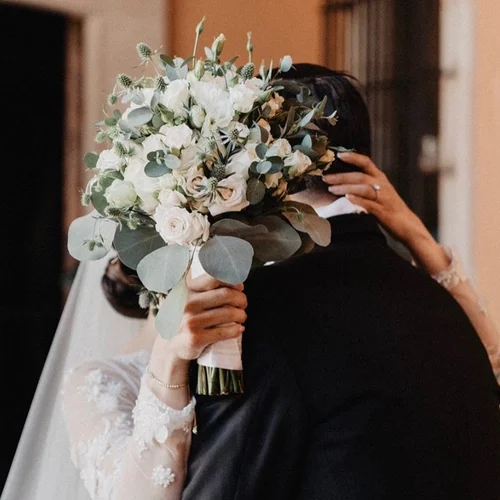
More discreet and lightweight, it mixes small blooms with greenery for a subtly wild feel. Perfect for garden weddings and for brides who want full freedom of movement.
- Pros: comfortable, budget-friendly, very fresh.
- Cons: can read less “formal” depending on the blooms.
- Suggested flowers: astilbe, chamomile, eucalyptus, limonium.
4) Asymmetric bouquet
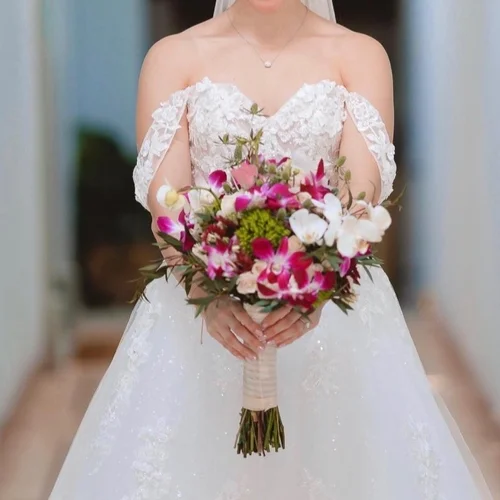
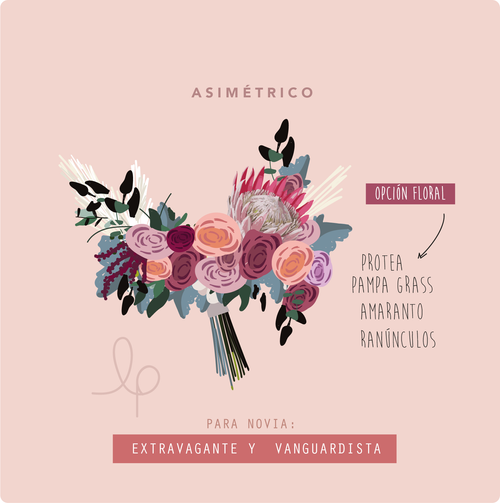
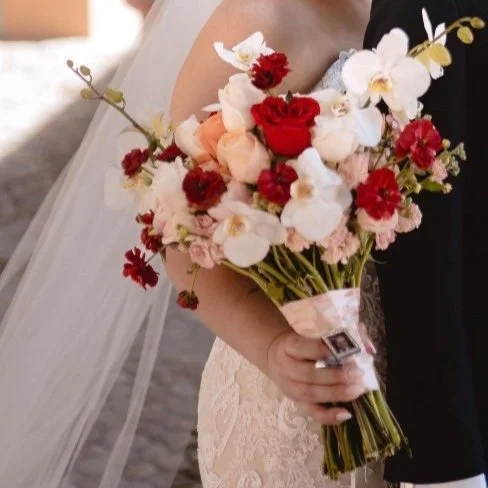
An editorial favorite: elongated lines, side volume and contrasting textures. It shines with minimal dresses (sheath or mermaid) and polished makeup.
- Pros: high impact in photos; very on trend.
- Cons: more fragile in wind; can “compete” with very voluminous gowns.
- Suggested flowers: cymbidium orchids, anthurium, garden roses, Italian ruscus.
5) Cascade bouquet
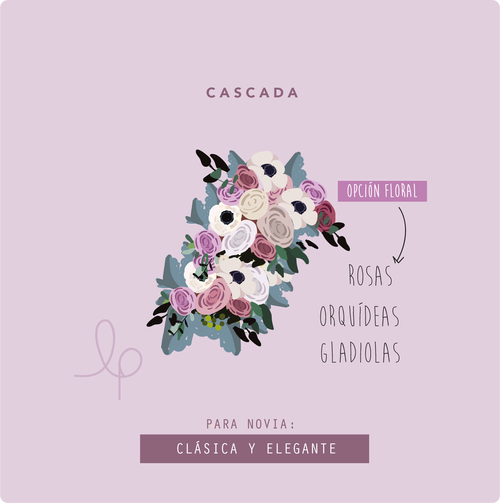
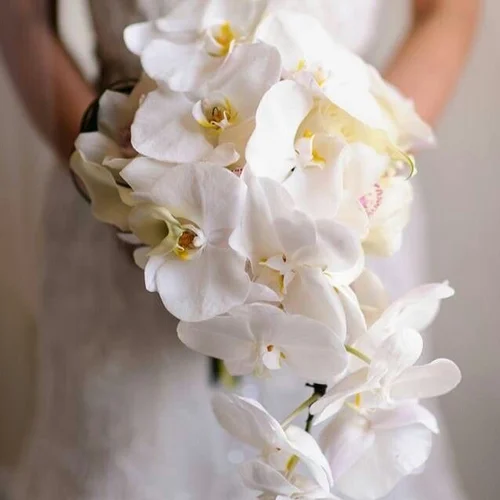
Feminine and elegant, with a defined downward flow that streamlines the body. It flatters taller brides (or anyone if you adjust length to keep proportions) and is a showstopper in churches and long aisles.
- Pros: dramatic, very ceremonial.
- Cons: requires expert assembly and careful transport.
- Suggested flowers: phalaenopsis orchids, lilies, trailing greenery.
6) Hoop bouquet
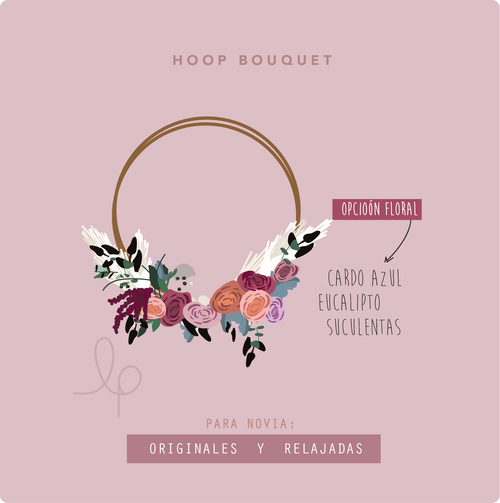
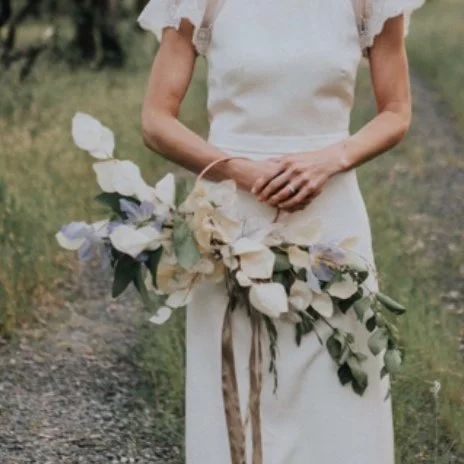
A floral hoop symbolizing eternity. Practical and lightweight; perfect for rustic-chic or garden-style weddings, and also a lovely option for bridesmaids.
- Pros: original, comfy, super photogenic.
- Cons: less frontal volume; not always ideal for very formal rites.
- Suggested flowers: spray roses, eucalyptus, olive, baby’s breath.
Color, season & fragrance
For a cohesive look, start with your wedding palette and dress tone (optic white, ivory, blush-nude). In spring/summer, corals, blush and fresh greens sing; in fall/winter, think burgundy, terracotta and deep wine or navy accents. If you or guests are scent-sensitive, avoid very fragrant blooms (e.g., oriental lilies) and choose low-scent options (garden roses, peony, ranunculus, orchid).
Logistics: assembly, delivery & photos
- Delivery: request your bouquet 1–2 hours before bridal beauty prep; keep it cool and in water if the design allows.
- Toss bouquet: keep your main bouquet and toss a lighter twin.
- How to hold: rest it at the hip bone, elbows relaxed, tag/stems facing you.
- Stem finish: matte ribbon (avoid shiny satin), comfortable length, and a hidden pin.
- Weather: for extreme heat, ask for internal hydration (foam or water vials) and avoid ultra-delicate blooms.
- With your dress: if your look includes a veil or long veil, balance the elements: dramatic veil + contained bouquet, or vice versa.
Want us to design your ideal bouquet?
We’ll build a moodboard, palette, seasonal flower list and try-ons with your dress to achieve a coherent look.
FAQ
What size should my bouquet be?
As a guide, match the diameter to your torso: 22–26 cm (8.5–10 in) for round/posy on average heights; adjust ±2–4 cm (±1–1.5 in) if you’re very petite or tall.
How long will it stay fresh?
With good hydration it lasts 8–12 hours. Avoid direct sun and wind; ask your florist for hydrating spray if available.
Can I mix off-season flowers?
Yes, but cost may rise and durability may drop. Pair one hero bloom in season with year-round fillers to optimize budget.